

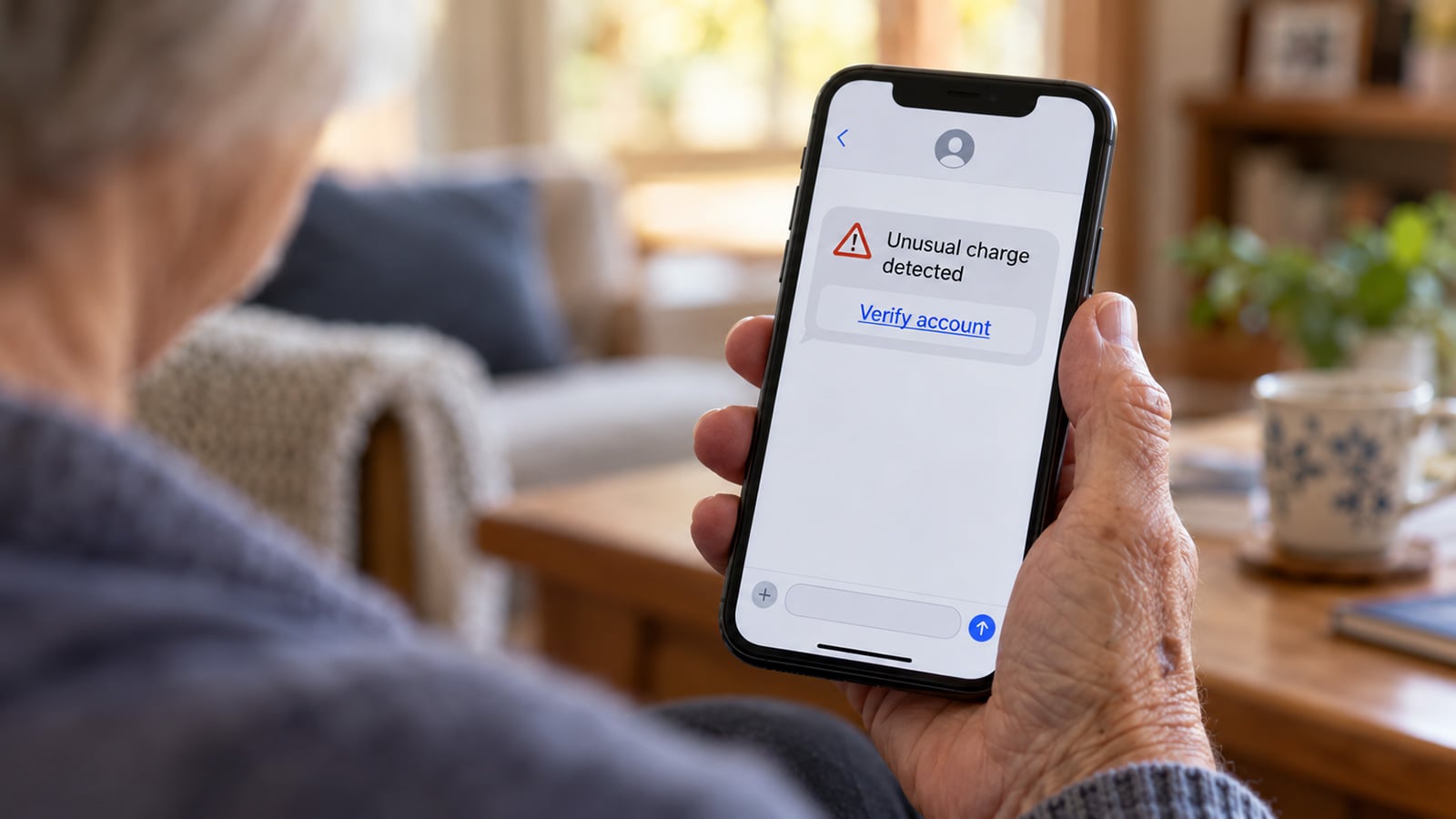
Image credit: concept illustration by Suzanne Kantra/Techlicious via ChatGPT
The FTC says scams may have cost Americans 60 and older as much as $119.5 billion in 2025, though reported losses total about $3 billion. The annual report to Congress (PDF) on fraud against older adults, released October 19, shows those reported losses have grown fivefold since 2020, when they were about $600 million.
The total amount of losses is challenging to determine because the FTC says that only 4.8% of people who experience smaller-scale fraud report it to a government agency or the Better Business Bureau. Of those older Americans who did report, 6% lost more than $100,000.
Investment scams had the biggest impact on the total, with reported losses in 2025 up 42% to more than $1 billion. Victims described being lured to fake cryptocurrency platforms, often after scammers contacted them through social media. Impersonation scams came in next, with scammers posing as government agencies such as the IRS, or banks. The FTC says government agencies will never tell you to move your money to protect it, keep a conversation secret, or pay for a government grant.
Older adults were also more than four times as likely as younger people to report losing money to a tech support scam. In one FTC case, overseas operators used fake virus alerts impersonating Microsoft and McAfee to sell tech support, and payment processor Nuvei agreed to turn over $4.85 million for refunds to those that were defrauded.
To help protect yourself, Techlicious recommends looking at antimalware solutions for their built-in scam detection, a feature many people don’t know they have. Microsoft Defender, which is already built into Windows, includes phishing protection, though its web protections work best in Edge. The paid picks in Techlicious’ antivirus guide, Bitdefender Total Security, McAfee+ Premium, and Norton 360 Deluxe, add scam and phishing protection across browsers, and McAfee’s also flags suspicious texts, emails, and deepfakes.
If you have already sent money to someone, report it fast to ReportFraud.ftc.gov: the FBI froze more than $10.8 million of the $18.7 million lost in 200 FTC-referred reports last year. Older adults who report significant losses are connected to the Justice Department’s National Elder Fraud Hotline.

