

With additional reporting by Palash Volvoikar
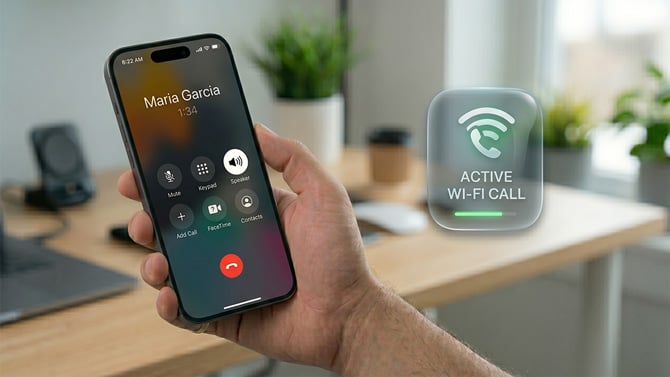
Even when you can not get a cell phone signal, you can still make calls and receive texts on your iPhone. With Wi-Fi calling, your calls and texts are routed through whatever Wi-Fi network your iPhone is logged into instead of your carrier's cellular network. That means you can still be reached in the subterranean levels of hospitals, coffee shop dead zones, and anywhere else with good Wi-Fi that you can not get a cellular signal.
How to activate Wi-Fi calling
Virtually all iPhones still in use today support Wi-Fi calling. Your carrier needs to support it too – the major U.S. carriers all do (AT&T, T-Mobile, and Verizon), along with many smaller carriers like Google Fi, Mint Mobile, Visible, US Cellular, and Xfinity. Apple has a full list of carriers that support Wi-Fi calling by region.
However, Wi-Fi calling is not automatically enabled on iPhones. There are two ways to get to the setting, and both lead to the same toggle.
The quickest way is to go to Settings > Apps > Phone > Wi-Fi Calling, and then toggle on Wi-Fi Calling on This iPhone. This is also the path that shows up if you use the search bar at the top of Settings and type "Wi-Fi Calling."
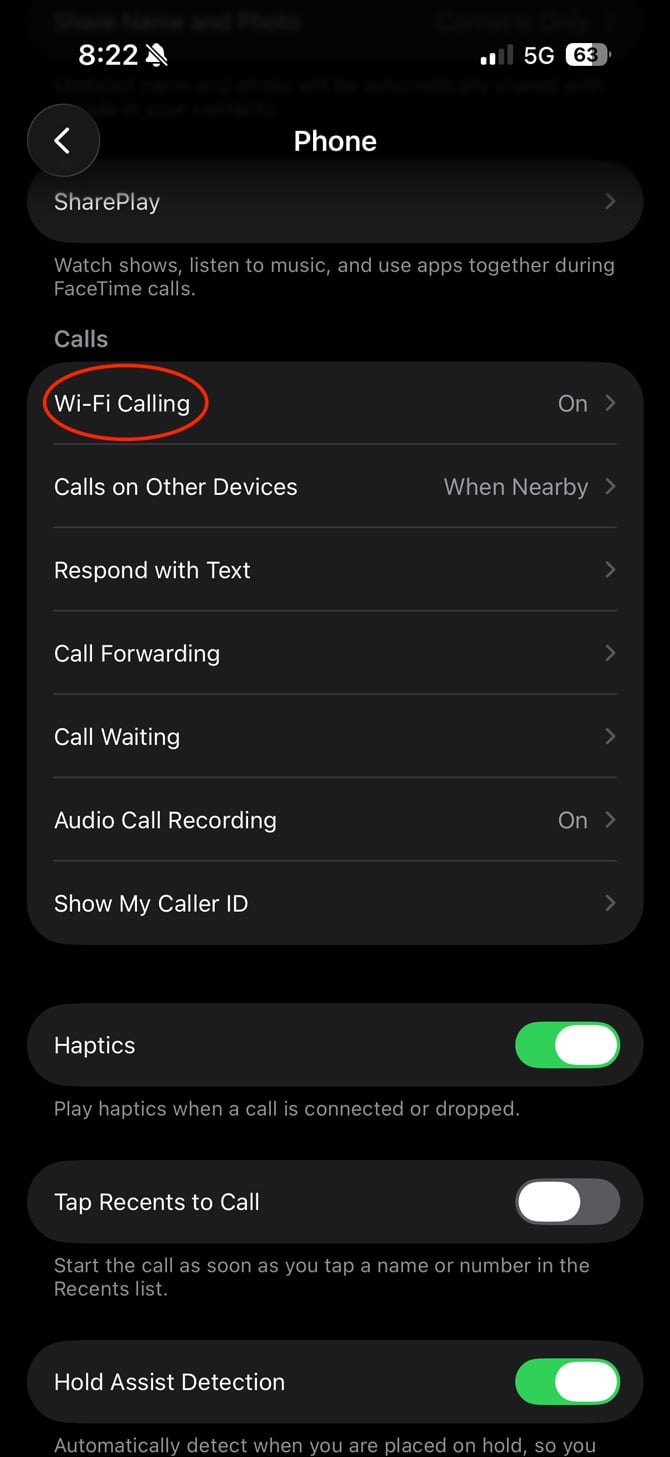
You can also get there through Settings > Cellular > Wi-Fi Calling. If your iPhone has more than one SIM, you will need to tap the line you want to use first, and then you will see the Wi-Fi Calling option.
Your iPhone usually sends your location when you call 911. However, when using Wi-Fi calling, your phone will use the Emergency Address you have stored on your iPhone. The best option is to make your home address your Emergency Address since that is where you spend most of your time. But keep in mind that if you have an emergency elsewhere when using Wi-Fi calling, you will need to provide your current location, or help may be delayed.
After you turn on Wi-Fi calling, you can also choose to make Wi-Fi calling available on any of your other Apple devices that are signed into your iCloud account, such as your Mac or iPad. These devices will be able to make and receive calls even if your iPhone is not close by.
Read More: How to Get Better WiFi
How to tell if Wi-Fi calling is working
Once Wi-Fi calling is enabled, your iPhone will automatically prioritize it over the cellular network when you are connected to Wi-Fi. There is no preference toggle like on Android phones – it just handles the switching for you.
You can confirm it is active by checking your status bar or opening Control Center. You should see "Wi-Fi" next to your carrier name (something like "T-Mobile Wi-Fi" or "AT&T Wi-Fi"). If you see that, your calls are being routed over Wi-Fi.
How to make a Wi-Fi call
Once you activate Wi-Fi calling, you dial or text as usual. The routing of your call or text is handled automatically in the background. It’s a rather simple process, and you don’t need to do anything differently once Wi-Fi calling is enabled.
Wi-Fi calling costs
There is no extra charge for using Wi-Fi calling, all calling fees will follow the rules of your existing cellular plan. This means if your plan is not unlimited, Wi-Fi calls will consume your monthly call minutes and calls to international numbers may incur fees.
For travelers, Wi-Fi calling is especially beneficial. It typically eliminates roaming and international charges for calls and texts back to the U.S., and many plans offer free calls to Canada and Mexico. However, be aware that international rates apply when calling non-U.S. numbers. Also, Wi-Fi calling is not supported in some countries. AT&T, for example, restricts Wi-Fi calling in China, Cuba, Iran, North Korea, Sudan, and Syria. Other carriers have their own restricted lists, so it is worth checking with yours before you travel.
The airplane mode trick for travel
If you are traveling internationally and want to use Wi-Fi calling without risking accidental roaming charges, there is a simple trick. You turn on Airplane Mode first, which disconnects you from all cellular networks. Then you turn Wi-Fi back on and connect to whatever local network is available – your hotel, a cafe, an airport lounge. This way, your iPhone can not accidentally connect to a foreign cell tower and trigger roaming fees if the Wi-Fi drops for a second.
Check out the Wi-Fi calling pages on your carrier's site for full details on included features, limitations, and charges. Here are the major carrier's pages: AT&T Wi-Fi calling, T-Mobile Wi-Fi calling, and Verizon Wi-Fi calling.
Need to set up an Android phone for Wi-Fi calling? Check out our story on How to use Wi-Fi calling on your Android phone.
Updated on 05/11/2026 with current activation steps for iOS 26, expanded carrier and country information, and tips for confirming and using Wi-Fi calling while traveling.
[Image credit: Palash Volvoikar/Techlicious generated with Google Gemini]


From Carl Chappell on March 12, 2020 :: 5:18 pm
I’ve said it before and I’ll say it again: the ads that pop up right in the middle of your great articles while reading the articles is incredibly annoying!
Reply
From exactly on May 11, 2022 :: 11:35 pm
exactly, well said…we have mentioned before too..but nothing is done…plus the whole busyness of the pages bog them down
Reply